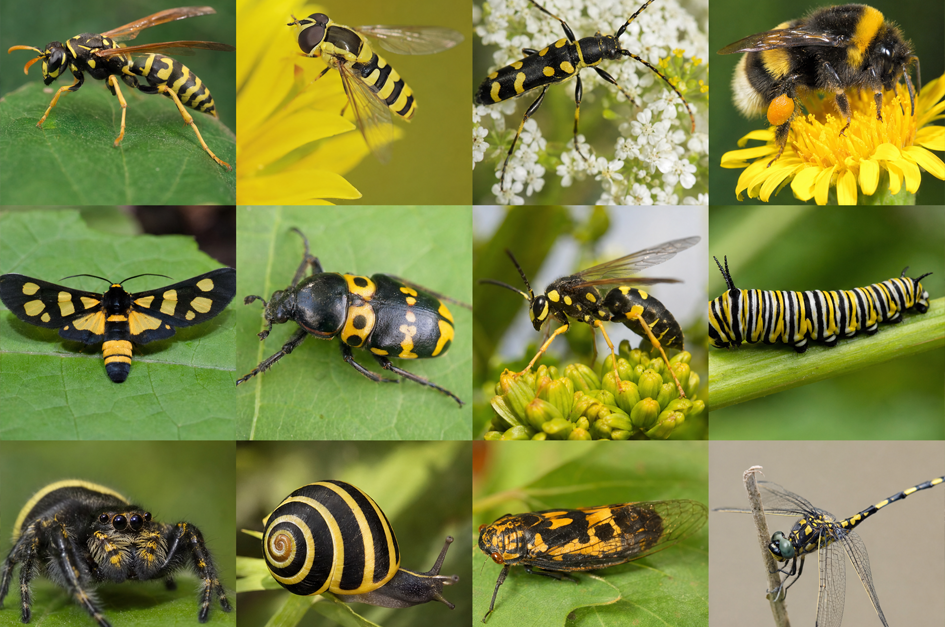
When you think of insects with bold yellow and black coloring, bees, wasps, and hornets probably come to mind immediately. But have you ever wondered why so many different insects share the same striking color pattern?
The answer is one of nature's most effective warning systems.
Nature's Warning Sign
Bright colors often serve as a warning. It’s called “Aposematic Coloration”. These color patterns tell predators, "Stay away."
Yellow and black is one of the most recognizable warning combinations in nature. These contrasting colors are highly visible against flowers, grass, trees, and even the sky, making them easy for birds, reptiles, and other predators to spot.
Over millions of years, predators have learned that many yellow-and-black insects can sting, bite, spray defensive chemicals, or simply taste unpleasant. As a result, many animals instinctively avoid insects displaying these colors.
The Original Yellow-and-Black Insects
Bees are among the most famous examples. Honeybees and bumble bees use their stingers to defend themselves and their colonies. Their bright coloration acts as a visual reminder to predators that approaching them may have consequences.
Wasps and hornets take this warning system even further. Species such as paper wasps, yellowjackets, and bald-faced hornets aggressively defend their nests when threatened. Their distinctive yellow-and-black patterns help advertise their ability to sting before a confrontation ever occurs.
In many cases, the warning coloration helps prevent attacks, benefiting both the insect and the predator.
The Great Pretenders
One of the most fascinating aspects of nature is that some insects wear yellow and black even though they cannot sting at all.
Hover flies, for example, are harmless pollinators that closely resemble bees or wasps. This phenomenon is known as “Batesian Mimicry”, where a harmless species gains protection by imitating a more dangerous one.
To a hungry bird, it's often safer to avoid anything that looks like a wasp rather than risk finding out the difference.
Some moths, beetles, and even certain flies have evolved similar appearances, creating an entire community of insects that benefit from nature's warning system.
Not Every Yellow-and-Black Insect Is a Threat
While many yellow-and-black insects deserve a wide berth, not all of them pose a danger.
Many bees are important pollinators that help support gardens, farms, and natural ecosystems. Hover flies are beneficial insects that feed on nectar and pollen while helping control certain pest populations.
Understanding the difference between beneficial insects and true pests can help homeowners make informed decisions when they encounter insects around their property.
When Yellow-and-Black Insects Become a Problem
During the spring and summer months, stinging insects often build nests around homes, sheds, decks, roof overhangs, playground equipment, and landscaping features.
While a single bee or wasp visiting flowers is usually nothing to worry about, large colonies located near entrances, patios, or areas where children and pets play can become a safety concern.
Paper wasps frequently build umbrella-shaped nests beneath eaves and porch ceilings. Yellowjackets often establish colonies underground or inside wall voids. Hornets may construct large aerial nests in trees or shrubs.
If these insects begin nesting close to your home or business, professional removal is often the safest solution.
Evans Pest Control Can Help
The technicians at Evans Pest Control understand the important role insects play in our environment. Our approach focuses on identifying the species involved and recommending the most appropriate course of action.
Whether you're dealing with wasps under an eave, yellowjackets in the ground, hornets in a tree, or simply trying to identify a mystery insect, our team can help protect your family while respecting beneficial pollinators whenever possible.
If you've discovered a nest or have concerns about stinging insects around your property, contact Evans Pest Control for a professional inspection and expert guidance.
Serving Philadelphia, Bucks County, Montgomery County, Delaware County, and surrounding communities throughout the Delaware Valley.
Continue Reading
More From The Pest Files

Evans Pest Control
Seeing A Similar Pest Problem?
Tell Evans about the property, activity and warning signs. A member of the team will follow up with the appropriate next step.
- (267) 582-2687
- info@evanspestmgmt.com
- 2607 E Allegheny Ave., Philadelphia, PA 19134
Request Pest-Control Service
A member of the Evans team will follow up with you.