Are giant rats real? Learn how large city rats can become, why some rats appear enormous, and how Evans Pest Control uses IPM to protect businesses.
Anyone who has lived or worked in a large city has probably heard a story about an enormous rat.
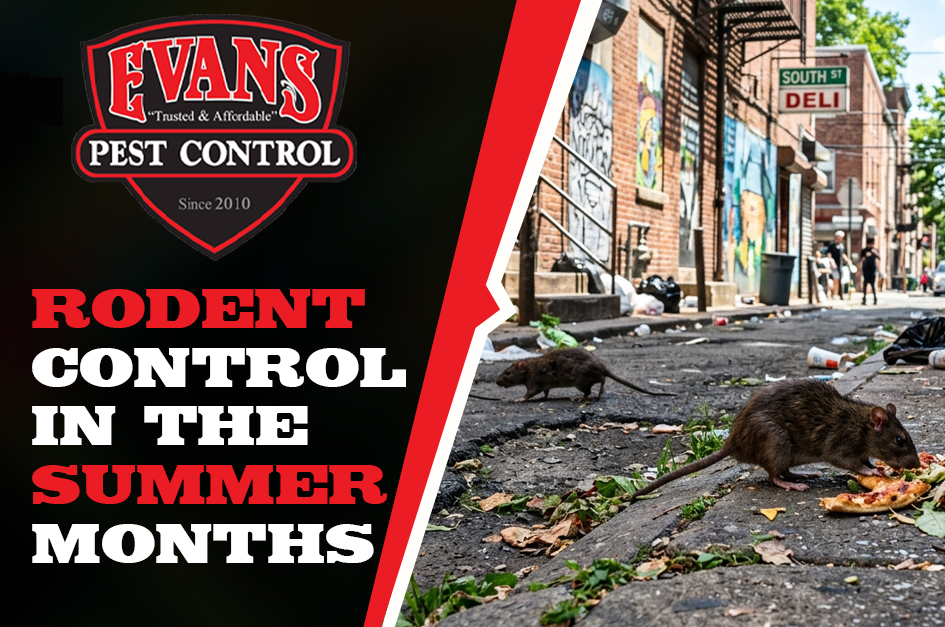
It may have been described as “the size of a cat,” seen running behind a dumpster, crossing an alley, disappearing into a sewer opening, or dragging food across a sidewalk. Photographs and videos can make these encounters look even more dramatic, especially when the rat is close to the camera or carrying something recognizable, such as a piece of food.
But are giant city rats actually real?
The answer is a little more interesting than a simple yes or no.
The Rats Most Commonly Seen in Cities
The rat most often associated with streets, sewers, alleys, basements, loading areas, and commercial trash facilities is the Norway rat, also called the brown rat or sewer rat.
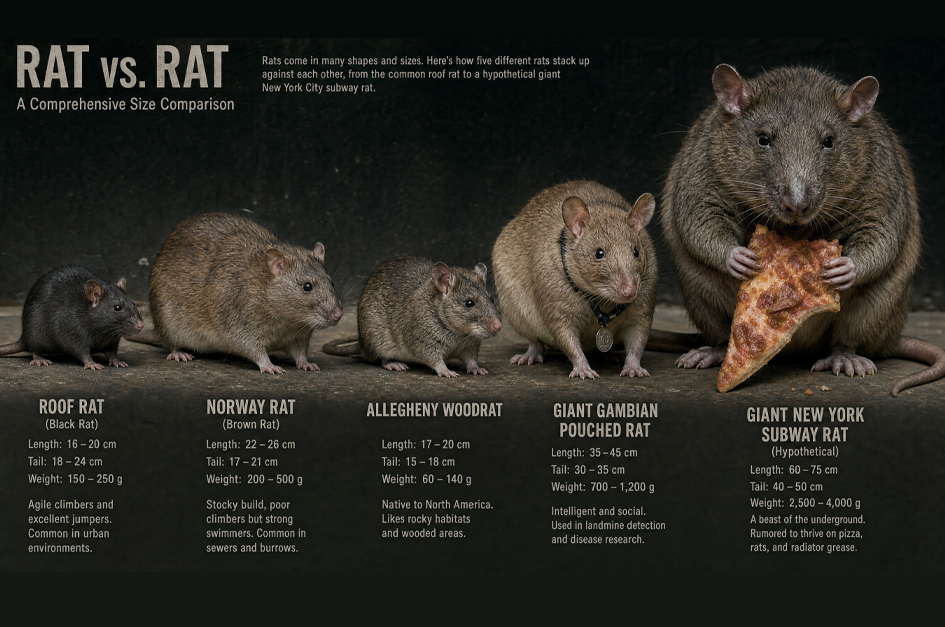
Norway rats have heavy bodies, blunt noses, relatively small ears, and tails that are usually shorter than the combined length of the head and body. A typical Norway rat measures approximately 13 to 18 inches from its nose to the end of its tail and weighs around 11 ounces, although individual animals naturally vary.
The other major structural rat is the roof rat, also known as the black rat or ship rat. Roof rats are generally slimmer and lighter than Norway rats. They have pointed noses, larger ears, and tails that may be longer than the head and body combined. They are also skilled climbers and are more likely to use trees, utility lines, attics, ceiling voids, upper storage areas, and elevated structural spaces.
In the Philadelphia region, an especially large rat seen at ground level, near a dumpster, around a foundation, or emerging from a burrow is more likely to be a mature Norway rat than a mysterious giant species.
Why Do Some City Rats Look So Enormous?
A normal rat can look surprisingly large during a brief encounter.
The tail adds considerable length
When people estimate an animal’s size, they often include its long tail without realizing it. A Norway rat with a body measuring several inches may approach a foot and a half in total nose-to-tail length.
When the tail is stretched across the pavement, the rat can appear much longer than expected.
Perspective can exaggerate the animal
A rat filmed close to a phone camera may appear much larger than people, vehicles, trash containers, or other objects farther behind it. Low-angle security cameras can create a similar effect.
A familiar object can also influence perception. A rat carrying a slice of pizza or standing beside a small drain opening may look gigantic, even though the object itself may be smaller than it appears in the image.
A mature Norway rat has a heavy build
Norway rats are not delicate-looking animals. They have thick bodies, coarse fur, strong legs, and broad heads. A mature, well-fed Norway rat can look considerably more substantial than the small laboratory rats or pet rodents most people picture.
Raised fur and posture change its appearance
A startled rat may arch its back, raise its fur, crouch, or turn sideways. These positions make the body appear taller and wider.
Poor nighttime lighting may also blur the edges of the animal, making it difficult to judge where the body ends and the shadow begins.
Are There Really Giant Rat Species?
Yes. Large rat-like rodents do exist.
The Gambian pouched rat, native to Africa, is one of the largest animals commonly called a rat. Florida wildlife authorities report that it may measure approximately 20 to 35 inches from its nose to the end of its tail, with an average weight of about three pounds. These animals have large cheek pouches and are very different from the Norway rats normally encountered in American cities.
Other unusually large rodent species have also been documented in different parts of the world. That does not mean populations of three-foot African pouched rats are secretly living beneath Philadelphia streets.
The important distinction is between a genuinely large rodent species and an unusually large-looking member of a common urban species.
What About Reports of Cat-Sized Subway Rats?
Stories of rats weighing eight, ten, or even fifteen pounds have circulated for decades. These accounts are usually difficult to verify and may involve exaggerated size estimates, distorted photographs, mistaken identity, or fictional illustrations.
An ordinary city rat can certainly be large enough to startle someone. However, an eight- to fifteen-pound “subway rat” would be dramatically larger than the normal size range of the Norway rat.
When someone reports a rat “the size of a cat,” a pest-management professional is more interested in the surrounding evidence than the witness’s size estimate.
Where was it seen? Was it near garbage, a sewer opening, a loading dock, a construction site, a vacant lot, a commercial kitchen, or an overgrown area? Did it enter a burrow or structural gap? Were droppings, gnaw marks, tracks, rub marks, or nesting material present?
Those clues tell us much more about the actual problem.
Why Larger Rat Sightings Occur Around City Buildings
Urban properties can provide nearly everything rats require: food, water, shelter, warmth, and concealed travel routes.
Commercial dumpsters, spilled food, damaged trash bags, grease accumulation, standing water, improperly stored ingredients, dense vegetation, cluttered storage areas, and structural deterioration can all make a property more attractive to rodents.
Construction and demolition may also disturb established burrows and travel routes. Rats that previously remained hidden may suddenly appear in alleys, yards, parking areas, loading zones, or neighboring buildings as they search for new shelter.
Philadelphia’s Department of Public Health maintains a rat-reporting process for residences and public parks. Rat activity involving food businesses is directed to the city’s Office of Food Protection, reflecting the importance of responding appropriately when rodents are seen around commercial food environments.
One Large Rat May Point to a Larger Problem
The size of the rat is usually less important than the conditions that allowed it to be there.
A single sighting may reveal:
• An accessible food or water source.
• A damaged door sweep or utility penetration.
• Burrows around a foundation or landscaped area.
• Gaps beneath loading doors.
• Openings around plumbing, conduit, rooflines, or vents.
• An established travel route between neighboring properties.
• Poorly managed trash or outdoor storage.
• Activity inside wall, ceiling, basement, or crawlspace voids.
Professional inspectors look for droppings, fresh gnawing, tracks, burrows, runways, greasy rub marks, nesting material, damaged packaging, and sounds inside structural spaces. Rats frequently follow the same protected routes, leaving repeated signs along walls, pipes, beams, fences, foundations, and equipment lines.
For a business, waiting until rats are seen during operating hours can allow a manageable exterior problem to develop into an interior infestation.
Why Rodent Control for Businesses Requires More Than Bait
Placing a few traps or bait stations may reduce visible activity, but it does not automatically correct the conditions supporting the infestation.
If food remains accessible, doors remain damaged, openings are left unsealed, or neighboring activity is ignored, new rodents may replace the ones removed.
That is why Evans Pest Control uses an Integrated Pest Management, or IPM, approach for commercial rodent control.
IPM is a structured pest-management process that combines inspection, identification, monitoring, prevention, sanitation, exclusion, and carefully selected control methods. The goal is not simply to react to individual rodents. It is to understand why activity is occurring and reduce the conditions that allow it to continue. The EPA describes IPM as an environmentally sensitive approach that emphasizes monitoring, prevention, appropriate action thresholds, and targeted controls selected for effectiveness and risk.
Evans Pest Control’s IPM Approach for Businesses
Every commercial property presents a different set of conditions. A restaurant, warehouse, apartment building, school, health-care facility, office, retail store, and manufacturing property should not receive an identical rodent-control plan.
An Evans Pest Control commercial rodent program may include several coordinated steps.
Detailed inspection and identification
Technicians inspect interior and exterior areas for active rodents, droppings, burrows, gnawing, rub marks, tracks, damaged materials, nesting sites, and probable entry points.
Correct identification also matters. Norway rats, roof rats, and mice differ in their behavior, nesting locations, travel patterns, and preferred environments.
Monitoring and documentation
Monitoring devices and service records help determine where activity is occurring, whether conditions are changing, and which corrective measures are producing results.
This is especially valuable for businesses with multiple departments, storage rooms, tenant spaces, loading areas, kitchens, utility rooms, or exterior waste zones.
Exclusion recommendations
Rodent exclusion focuses on closing the routes animals use to enter the structure.
Potential entry points may include gaps around utility pipes, damaged masonry, openings beneath doors, roof penetrations, vents, loading-dock gaps, broken screens, and spaces where different building materials meet.
Durable repairs are important because rats can gnaw through materials that are too soft or poorly installed.
Sanitation and environmental corrections
Food residue, overflowing waste, standing water, clutter, dense vegetation, and improperly stored goods can sustain rodent populations.
Evans Pest Control can identify contributing conditions and work with property managers, maintenance teams, employees, and vendors to improve sanitation and reduce harborage.
Targeted rodent control
When active control is required, methods are selected according to the property, infestation level, rodent species, safety considerations, and applicable product directions.
The objective is to place control devices strategically along actual rodent travel routes—not simply scatter equipment throughout the building.
Follow-up and ongoing prevention
Rodent pressure can change with weather, construction, neighboring properties, trash conditions, deliveries, landscaping, and seasonal activity.
Continued inspection and monitoring help identify new activity before it becomes a larger operational problem.
Do Not Wait for the “Giant Rat”
A business does not need to see a mythical, cat-sized rat before taking action.
One dropping, one damaged package, one burrow, or one unexplained grease mark may be the first visible sign of a developing problem. Addressing the issue early is usually more effective than waiting until rodents are being seen by employees, customers, tenants, or inspectors.
Whether the rat looked average, unusually large, or absolutely enormous, the right response is the same: identify the species, locate the source, remove contributing conditions, close entry points, and implement a professional control plan.
Professional Commercial Rodent Control from Evans Pest Control
Evans Pest Control provides Integrated Pest Management solutions for restaurants, warehouses, property-management companies, multifamily buildings, offices, retail facilities, and other commercial environments throughout Philadelphia and the Delaware Valley.
Our team looks beyond the individual sighting to help determine how rodents are entering, what is supporting their activity, and what can be done to reduce the risk of recurrence.
Seeing rats, droppings, gnaw marks, burrows, or suspicious structural openings around your business? Contact Evans Pest Control to schedule a professional rodent inspection.
Evans Pest Control
Trusted & Affordable
Professional commercial rodent control throughout Philadelphia and the Delaware Valley.