Summer Isn't Just Insect Season — Rodents Remain Active Too
When most homeowners think about summer pest problems, they picture mosquitoes, ants, or wasps. What many people don't realize is that rats and mice remain highly active throughout the summer months, creating significant concerns for homes, businesses, restaurants, warehouses, apartment communities, and commercial facilities throughout Philadelphia and the surrounding Delaware Valley.
We understand that rodent control is one of the most serious and technically demanding services in the pest management industry. Unlike many common pests, rodents can spread disease, contaminate food supplies, damage property, and create significant health risks for occupants. Effective rodent management requires far more than simply placing bait stations or traps—it demands experience, inspection expertise, and a comprehensive Integrated Pest Management (IPM) approach.
Why Rodent Activity Increases During Summer
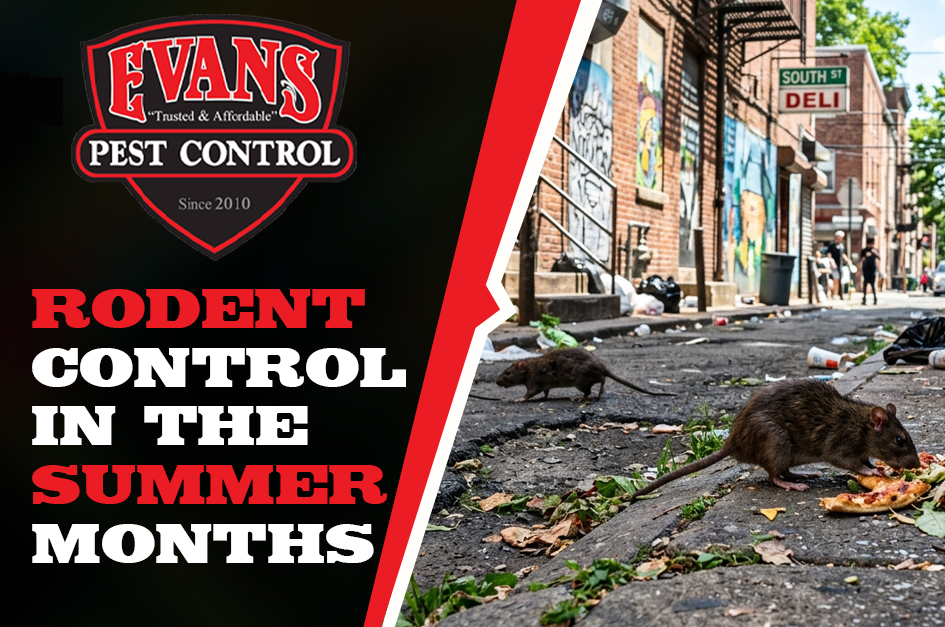
During the summer months, rodent populations are often at their highest levels. Warm temperatures, abundant food sources, active construction projects, outdoor dining, and increased human activity provide ideal conditions for rats and mice to thrive.
In urban and suburban environments throughout Philadelphia, rodents are commonly found around:
• Restaurants and food service facilities
• Apartment complexes and multi-family housing
• Warehouses and distribution centers
• Manufacturing facilities
• Schools and healthcare facilities
• Residential neighborhoods
• Construction sites
• Trash and recycling storage areas
As populations increase, rodents begin searching for new food and harborage opportunities, often leading them into homes and businesses.
The Serious Risks Associated with Rodents
Rodent infestations should never be viewed as a nuisance issue alone. Rats and mice can pose substantial health and property risks.
Rodents are capable of contaminating food products, food preparation surfaces, storage areas, and inventory through urine, droppings, nesting materials, and direct contact. They can damage electrical wiring, insulation, drywall, stored goods, packaging materials, and building infrastructure.
For commercial facilities, like restaurants, rodent activity can cause disasters:
• Failed inspections
• Regulatory violations
• Product contamination
• And serious reputation damage
For homeowners, rodent infestations can lead to expensive repairs, persistent odors, contamination concerns, and ongoing health risks for your family.
Why Effective Rodent Control Requires Experience
Rodent control is often one of the most misunderstood services in pest management.
Many infestations persist because only the symptoms are treated while the underlying causes remain unaddressed. A technician may remove visible rodents, but if entry points, food sources, nesting locations, and environmental conditions are not identified and corrected, the infestation will often return.
Successful rodent management requires an understanding of:
• Rodent biology and behavior
• Species identification
• Travel patterns and harborage areas
• Food source analysis
• Building construction
• Exclusion techniques
• Sanitation improvements
• Monitoring strategies
• And long-term prevention
Every property presents unique challenges. What works for a single-family home may be completely ineffective in a warehouse, restaurant, healthcare facility, or apartment building.
Evans Pest Control's Integrated Pest Management (IPM) Approach
Evans Pest Control technicians believe that rodent control is built around proven Integrated Pest Management (IPM) principles.
Rather than relying solely on baiting programs, our technicians focus on identifying and correcting the conditions that allow rodents to survive and reproduce.
Inspection
Every successful rodent program begins with a detailed inspection.
Our technicians evaluate:
• Entry points
• Structural vulnerabilities
• Food sources
• Moisture issues
• Harborage locations
• Rodent activity patterns
• And interior / exterior risk factors
This investigative process helps determine how rodents are entering the structure and what conditions are supporting their activity.
Exclusion
One of the most important components of rodent management is preventing access.
Even a small opening can allow mice or rats to enter a structure. Evans Pest Control technicians identify exclusion opportunities and provide recommendations to reduce rodent entry and movement.
Monitoring
Professional monitoring allows technicians to evaluate activity levels, identify travel routes, and determine whether populations are increasing or decreasing.
Monitoring data helps ensure treatment decisions are based on actual evidence rather than assumptions.
Targeted Control Measures
When treatment is necessary, Evans Pest Control utilizes targeted control strategies appropriate for the specific property and infestation.
These may include:
• Professional trapping programs
• Exterior rodent stations
• Interior monitoring devices
• Mechanical controls
• And population reduction strategies
Each program is tailored to the facility and its unique requirements.
Sanitation and Environmental Improvements
Rodents depend on food, water, and shelter. Addressing these resources is essential for long-term success.
Our technicians work with property owners, facility managers, and maintenance teams to identify environmental improvements that help reduce rodent pressure and support lasting results.
Residential Rodent Control
For homeowners, rodent activity often begins in:
• Attics
• Basements
• Crawlspaces
• Garages
• Utility penetrations
• Exterior foundation areas
Homeowners may notice scratching sounds, droppings, gnaw marks, unusual odors, or pet behavior changes before actually seeing a rodent.
Our residential rodent programs focus on identifying the source of the problem, reducing current activity, and helping prevent future infestations.
Commercial Rodent Control
Commercial rodent management presents an entirely different level of complexity.
Restaurants, warehouses, healthcare facilities, schools, industrial sites, and property management organizations often require ongoing monitoring, documentation, compliance support, and proactive prevention strategies.
Evans Pest Control has extensive experience working with commercial facilities throughout the Delaware Valley and understands the importance of maintaining a professional, documented, and effective rodent management program.
Protecting Philadelphia Homes and Businesses
Rodent control is not a one-size-fits-all service. Every infestation presents unique challenges that require careful evaluation, technical expertise, and a strategic approach.
Whether you're protecting your family's home, managing a restaurant, operating a warehouse, or overseeing a commercial property, professional rodent management can help reduce risks, protect property, and provide peace of mind.
At Evans Pest Control, our experienced technicians utilize Integrated Pest Management techniques and proven rodent control strategies to help residential and commercial customers throughout Philadelphia, Bucks County, Montgomery County, Delaware County, and Southern New Jersey maintain healthier, safer environments.