Seasonal Pest Prevention | Pennsylvania & South Jersey
Termites Don’t Take the Winter Off: Why Your Home Could Still Be at Risk
Cold weather can slow subterranean termites, but it doesn’t necessarily stop them. Here’s why activity can continue in fall and winter—and what homeowners should look for.
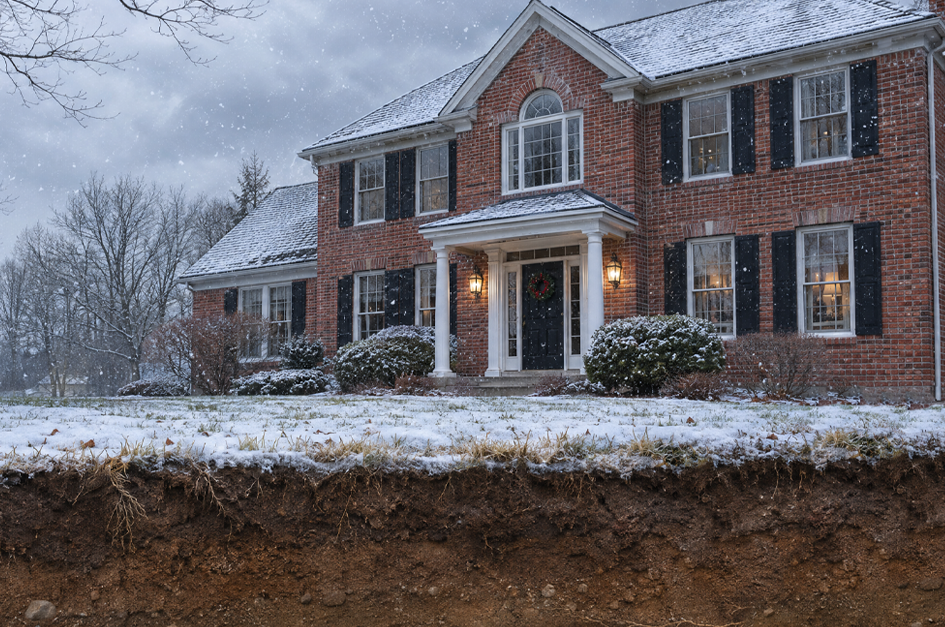
When temperatures drop across Philadelphia, southeastern Pennsylvania, and South Jersey, most homeowners expect insect activity to fade away. Mosquitoes disappear, ants become less noticeable, and the yard goes quiet until spring.
But there is one potentially destructive pest that may remain active out of sight: subterranean termites. Even in the colder months, termites can survive in protected soil and may continue feeding on wood where conditions are favorable. The absence of visible insects does not mean a home is free from termite activity.
Why Termites Can Survive Northeastern Winters
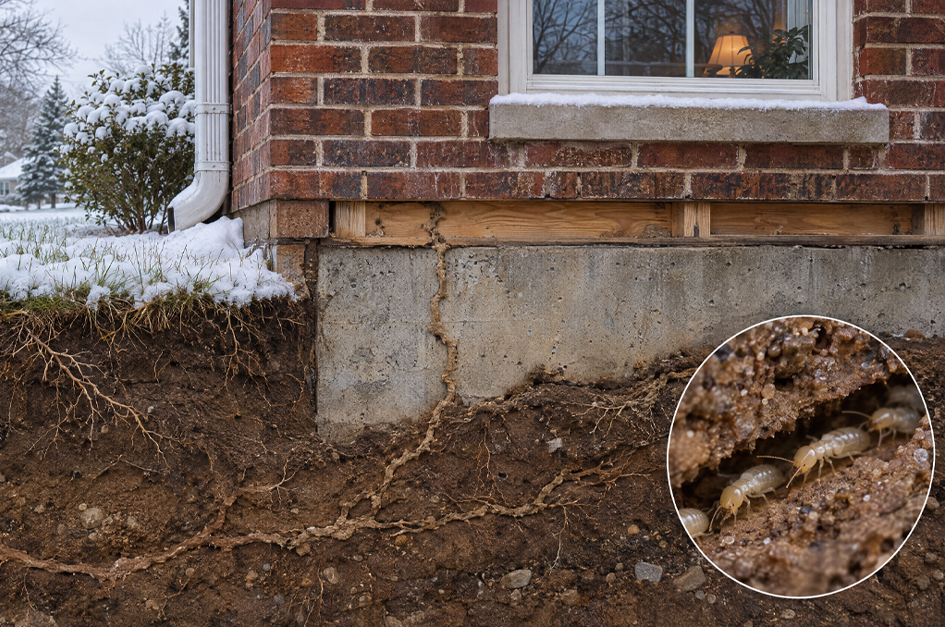
Eastern subterranean termites (Reticulitermes flavipes) are a common structural pest in our region. Unlike insects that spend much of their time in the open, these termites live and travel through soil, wood, and narrow protective shelter tubes.
As soil near the surface becomes cold or freezes, termite foraging generally slows. Colonies can remain in deeper, more protected soil, where temperatures and moisture are more favorable. Around heated buildings, protected areas near foundations and utility penetrations can sometimes allow activity to continue through winter.
Important distinction: Winter does not make termites more aggressive. Cold weather typically reduces their activity, but it does not guarantee that an existing colony has stopped feeding or died.
Warning Sign #1: Mud Tubes Along the Foundation
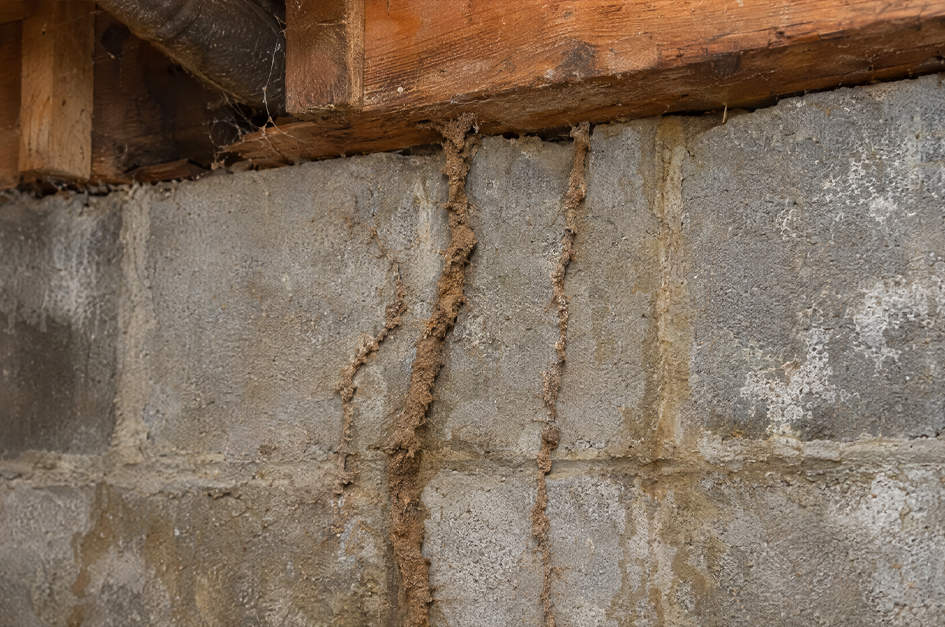
One of the clearest warning signs of subterranean termites is a narrow, earth-colored mud tube running across a foundation wall or another exposed surface.
Termites build these tubes to protect themselves from drying out as they move between the soil and a food source. Look carefully along basement walls, crawl spaces, foundation corners, and areas where wood meets masonry.
Even a dry or apparently abandoned tube warrants investigation; its appearance alone cannot confirm whether an infestation is currently active.
Warning Sign #2: Hollow or Weakened Wood
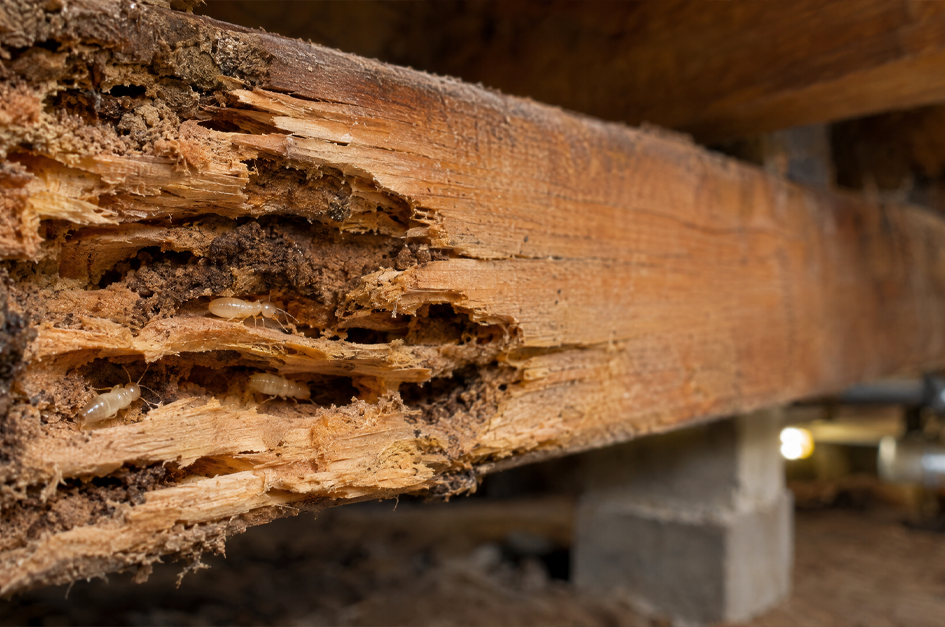
Termites often feed within wood, so damage can remain hidden behind a surface that initially looks intact.
Watch for wood that sounds unusually hollow when tapped, weakened trim, damaged baseboards, or structural members that appear soft or deteriorated. Some of these symptoms can also result from moisture damage or wood decay, so identifying the cause is essential.
Because termite activity is often concealed, waiting for obvious damage may mean waiting too long.
Other Winter Warning Signs Worth Checking
Discarded Wings Near Windows or Doors
Eastern subterranean termites commonly swarm in spring, but swarms may sometimes occur inside heated buildings during late winter. Small piles of similarly sized shed wings near windowsills or other light sources deserve attention. Winged ants can look similar, so save a specimen if possible for identification.
Blistered Paint, Warped Trim, or Unexplained Surface Damage
Changes in paint, trim, or wood surfaces can accompany hidden termite activity, although they are not specific to termites. Seasonal humidity, leaks, and rot can cause similar effects. Investigate persistent or unexplained changes rather than assuming winter weather is responsible.
Persistent Moisture and Wood-to-Soil Contact
Subterranean termites need moisture. Damp crawl spaces, leaking pipes, poor drainage, and wood in direct contact with soil can create favorable conditions. Firewood stacked against the house, buried wood scraps, and deteriorating outdoor timbers are also worth addressing.
Five Practical Steps to Take Before or During Winter
- Check accessible foundations. Inspect basement and crawl-space walls for earth-colored mud tubes.
- Address moisture. Repair leaks, clear gutters, and direct downspouts away from the home.
- Move firewood away from the exterior. Keep stored wood elevated and away from the foundation when practical.
- Reduce direct wood-to-soil contact. Examine steps, deck supports, siding, landscaping timbers, and stored lumber.
- Get suspicious areas evaluated. If you find mud tubes or unexplained damage, request a professional inspection instead of relying on appearance alone.
Can Termites Really Cause Damage in January or February?
Yes, under the right conditions. Termite activity depends on the temperatures and moisture levels around the colony. Frozen soil can sharply limit foraging, but protected areas around heated buildings may remain suitable for feeding.
That is why finding no swarming insects in winter is not proof that termites are absent. A colony may have been present long before cold weather arrived—and activity can stay concealed until spring or until damaged wood is uncovered.

A Winter Inspection Can Still Be Valuable
Termites rarely announce their presence. Their feeding paths may be hidden inside wood, beneath the soil, or behind finished surfaces.
A professional inspection can help identify visible evidence, assess moisture and structural risk factors, and determine what additional evaluation or treatment may be appropriate.
If you notice mud tubes, damaged wood, or unexplained changes around your foundation, don't assume you have to wait until spring to investigate.
Don’t Let Winter Give You a False Sense of Security
At Evans Pest Control, we believe informed homeowners are better equipped to protect their properties. Our approach emphasizes inspection, education, prevention, and practical pest management solutions.
If you have noticed possible termite warning signs, contact Evans Pest Control to discuss an evaluation of your property.
Serving Philadelphia, Bucks County, Montgomery County, Delaware County, and Camden County, New Jersey.